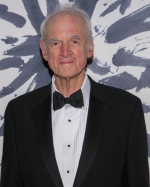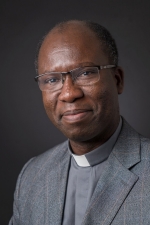
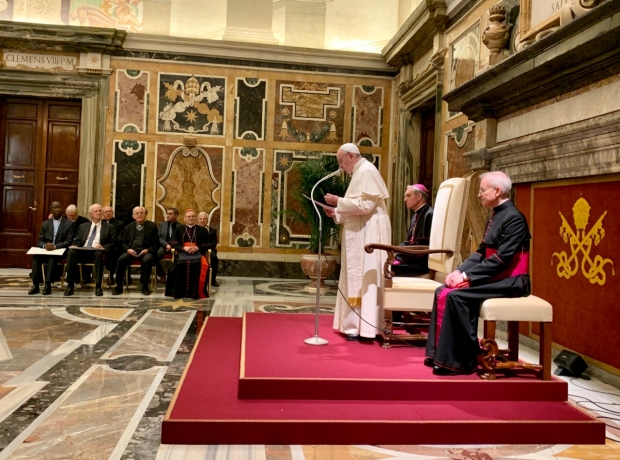
Vatican City, November 9, 2019 – During a solemn ceremony held this morning in the Clementine Hall of the Apostolic Palace, Pope Francis awarded the 2019 Ratzinger Prize to Canadian philosopher Charles Margrave Taylor and African theologian Paul Béré.
For the Pontiff, this is a "beautiful opportunity to once again express my esteem and affection for my predecessor, the dear Pope Emeritus Benedict XVI." "We are grateful to him," he stated, "for the teaching and example he gave us in serving the Church through reflection, thought, study, listening, dialogue, and prayer, so that our faith may remain alive and well despite the changing times and situations, and so that believers may be able to account for their faith in language that can be understood by their contemporaries and enter into dialogue with them, to seek together the paths of encounter with God in our time." "This," the Pope continued, "was always the intense desire of Joseph Ratzinger, a theologian and pastor who never confined himself to a purely conceptual and disembodied culture, but gave us the example of a search for truth in which reason and faith, intelligence and spirituality, are continually integrated. All disciplines and arts contribute to this by contributing to the growth of humanity toward its fullness. This, ultimately, is found only in the encounter with the living person of Jesus Christ, the incarnate Logos, the revelation of God who is love."
Francis then recalled that "being and remaining in active dialogue with cultures, which change over time and diversify in different parts of the world, is a duty for theology, but it is also a necessary condition for the vitality of the Christian faith, for the Church's mission of evangelization." "From this perspective," the Pope said, "our two laureates have offered a notable contribution, for which we acknowledge them today with admiration and gratitude."
The Pope then focused on the two scholars awarded the recognition.
“During his long life of research, teaching, and action, Professor Taylor has explored many fields, but in particular he has dedicated his mind and heart to understanding the phenomenon of secularization in our time. It indeed poses a great challenge for the Catholic Church, indeed for all Christians, and we might say for all believers in God. Pope Benedict has repeatedly told us that the priority of his pontificate was to re-proclaim God—the God of Jesus Christ—at a time when He seems to be waning on the horizon of vast swathes of humanity. Now, few scholars have addressed the problem of secularization with such a broad perspective as Professor Taylor. We are grateful to him for the depth with which he has addressed it, carefully analyzing the development of Western culture, the movements of the human spirit over time, identifying the characteristics of modernity in their complex articulation, in the shadows and lights. Thus, he helps us to interpret in a non-reductive way the reasons for the changes that have occurred in religious practice; he invites us to intuit and seek new ways to "To live and express the transcendent dimensions of the human soul, the spiritual dimensions in which the Holy Spirit continues to work even when we don't initially realize it. All this allows us to engage with Western secularization in a way that isn't superficial or fatalistically discouraged. And this is necessary not only for a reflection on the culture of our time, but above all for a deep dialogue and discernment within its context, to adopt the appropriate attitudes for living, witnessing, expressing, and proclaiming the faith in our time."
Paul Béré is the first African to receive the Ratzinger Prize and is an esteemed scholar of Sacred Scripture. With this recognition, I am pleased to express my appreciation and encouragement to all those committed to the inculturation of the faith in Africa with their original and in-depth contributions. In the early centuries of Christianity, North Africa provided the Church with colossal figures—such as Tertullian, Cyprian, and Augustine—but then the spread of Islam and subsequent centuries of colonialism prevented a true African inculturation of the Christian message until the second half of the last century. Contemporary African theology is therefore still young, but it appears dynamic and full of promise. Fr. Béré provides an example of this by working on the interpretation of Old Testament texts in an 'oral' context, thus drawing on the experience of African cultures; as well as by striving for knowledge, understanding, and reception in the African context of the Synods in which he participated.
"Although the two laureates come from different continents and cultural backgrounds," Pope Francis concluded, "their message is much more similar than it appears at first glance. In the variety of cultures, in their differentiation over time and space, one can and must always seek and find the path to God and the encounter with Christ. This was and is the commitment of Professor Taylor and Father Béré; this is the mission of all those who, following the teachings of theologian Joseph Ratzinger and Pope Emeritus Benedict XVI, propose to be 'cooperators of the Truth.'"
In his greeting to the Holy Father, the President of the Ratzinger Foundation, Father Federico Lombardi, emphasized that "despite the passing of the years, we continually experience anew that the cultural and spiritual legacy of Joseph Ratzinger-Benedict XVI is alive and inspiring for the reflections and dialogues that our time demands, and to which you invite us to open ourselves with courage and trust."
Father Lombardi then presented the Foundation's recent activities, beginning with the International Symposium organized in Budapest on October 8-9 with the Pázmány Péter Catholic University, on the economic, social, and spiritual situation of the countries of Central and Eastern Europe thirty years after the fall of the Berlin Wall. It "retraced the great ideas, teachings, and travels of John Paul II and Benedict XVI—particularly the Encyclical Caritas in Veritate—and concluded with a Message entitled 'Reconciliation, Tradition, and Trust,' which echoes his frequent admonitions to overcome nationalistic tendencies and new forms of ideological colonization, and to favor dialogue and encounter among all peoples."
"The commitment to interdisciplinary dialogue," Father Lombardi continued, "so encouraged by Joseph Ratzinger, between the natural sciences, the human sciences, philosophy, and theology, is a vast and fascinating field in which human reason can explore to seek—in harmony with faith—the truth and the ways to ensure full respect for the dignity of the human person and his or her purpose in the complex events of today's world." The “Open Reason” Awards, in collaboration with the Francisco de Vitoria University of Madrid, and the “Reason and Hope” Awards with the Nicolaus Copernicus University of Toruń, “have this year promoted the value of original research in such important fields as the philosophy of health, the psychology of forgiveness, the ethics of economics, the ethical training of managers, and the ethical issues of the development of artificial intelligence.”
"A new front of commitment," Father Lombardi concluded, "is developing in collaboration with Roman academic institutions in the highly sought-after field of responsible leadership training, inspired by the ethics of virtue. Your often-repeated call to serve others, in society and in the Church, urges us to enhance the legacy of your predecessor's thought in this direction as well."
In his welcoming address, before outlining the profiles of the two award recipients, Cardinal Angelo Amato, president of the Foundation's Scientific Committee, observed that "culture is the lifeblood of humanity and the Church. A culture, nourished by the Gospel, sustains and ennobles every human being, wherever they may be. Countless individuals—scholars and institutions—enrich culture with their long-standing commitment to research and the promotion of goodness, beauty, truth, and justice." "The Church, and first and foremost the Supreme Pontiffs—and especially recently Pope Benedict and Pope Francis—remain the promoters and architects of a more fraternal, more supportive, more peaceful, and more ecologically aware human culture. In this way, the horizons of history are increasingly advanced, and, enlightened and guided by divine Providence, it generates a humanity that is better and more worthy of being called a creature of God," the cardinal noted.
Present at the ceremony were 16 cardinals (members of the Scientific Committee of the Kurt Koch Foundation, Luis Francisco Ladaria and Gianfranco Ravasi; the Dean of the College of Cardinals, Angelo Sodano; Santos Abril, Ennio Antonelli, Francis Arinze, Tarcisio Bertone, Paul Josef Cordes, Raffaele Farina, Walter Kasper, Francesco Monterisi, Gerhard Ludwig Müller, Marc Ouellet, and Antonio Maria Vegliò), several archbishops and bishops, numerous academics, members of the Diplomatic Corps accredited to the Holy See, and several scholars who have received the Ratzinger Prize in previous years. With the 2019 edition, the ninth, the total number of Ratzinger Prize recipients has risen to 20, hailing from 14 different countries across four continents. Their work and their personalities point to fundamental directions and fields for cultural, philosophical, and theological research in the Church and society today.